Table of Contents
ToggleMetal kitchen cabinets aren’t a new invention, they dominated mid-century kitchens before wood took over in the 1970s. Now they’re back, and for good reason. Homeowners are rediscovering what hospitals, labs, and commercial kitchens never forgot: metal cabinetry delivers unmatched durability, easy maintenance, and a clean aesthetic that works in everything from industrial lofts to farmhouse remodels. Unlike particleboard boxes with veneer peeling at the edges, metal cabinets can handle moisture, impact, and decades of use without warping or sagging. This guide walks through everything needed to evaluate, select, and install metal kitchen cabinets in a residential setting.
Key Takeaways
- Metal kitchen cabinets offer superior durability, resisting moisture, heat, and impact far better than wood, making them ideal for long-term kitchen investments that won’t sag, warp, or delaminate.
- Stainless steel, aluminum, and powder-coated steel each serve different needs—stainless offers longevity and corrosion resistance, aluminum provides affordability and lightweight options, and powder-coated steel combines strength with color customization.
- Installation requires precise leveling with plastic or metal shims and fastening to wall studs with heavy-duty screws, as metal cabinets don’t compress like wood and demand professional or experienced DIY handling.
- Maintenance is remarkably low compared to wood—a simple damp cloth wipe keeps metal cabinets clean, with occasional vinegar treatment for water spots and touch-up paint for powder-coated scratches to prevent rust.
- Metal kitchen cabinets cost $150–$600 per linear foot depending on material and customization, but their 50+ year lifespan and recyclability make them an eco-friendly alternative that outlasts traditional cabinetry.
- Design flexibility allows metal cabinets to work in industrial, minimalist, farmhouse, and vintage styles, with brushed finishes and muted powder-coat colors helping them blend seamlessly into any kitchen aesthetic.
What Are Metal Kitchen Cabinets and Why Are They Making a Comeback?
Metal kitchen cabinets are storage units constructed from sheet metal, typically stainless steel, aluminum, or powder-coated steel, rather than wood or engineered wood products. The cabinet box, doors, and sometimes even shelves are fabricated from metal, then welded or fastened together.
They first gained popularity in the 1930s through the 1950s, produced by manufacturers like Youngstown and Geneva. Post-war suburban homes featured gleaming steel cabinets with chrome handles and rounded corners. By the 1970s, wood cabinetry became the default, and metal units were relegated to commercial spaces.
The comeback stems from several factors. Open floor plans and industrial design trends favor the sleek, minimalist look of metal. Concerns about off-gassing from particleboard and MDF adhesives drive some buyers toward inert materials. Others appreciate that metal cabinets are 100% recyclable and often made from recycled content. Finally, the durability factor appeals to anyone who’s dealt with water-damaged base cabinets or sagging shelves, metal doesn’t swell, warp, or provide a home for mold.
Benefits of Choosing Metal Kitchen Cabinets for Your Home
Durability is the headline advantage. Metal cabinets resist moisture, heat, and physical impact better than any wood product. A base cabinet next to the sink won’t delaminate if a supply line leaks. Drop a cast-iron skillet on a metal shelf, and it might dent, but it won’t crack or collapse.
Fire resistance matters more than most homeowners realize. Metal cabinets won’t fuel a kitchen fire the way wood cabinetry does. Many insurance carriers recognize this, though premium reductions vary by policy.
Pest immunity is straightforward: termites, carpenter ants, and wood-boring beetles can’t infest steel. In humid climates or older homes with recurring pest issues, this eliminates a common failure mode.
Low maintenance translates to daily convenience. Wipe down powder-coated or stainless surfaces with a damp cloth, no special cleaners, no worry about water marks penetrating finish, no need to reseal or refinish every few years.
Weight capacity exceeds wood cabinets of similar gauge. A well-constructed metal shelf can support 150–200 pounds without additional bracing, useful for storing small appliances or cast-iron cookware.
Eco-friendliness comes from recyclability and longevity. At end-of-life, metal cabinets go to scrap yards, not landfills. And because they last 50+ years, replacement cycles stretch far longer than typical wood cabinets.
Types of Metal Kitchen Cabinets: Stainless Steel, Aluminum, and Beyond
Stainless steel dominates the professional and residential markets. Type 304 stainless (also called 18-8 for its chromium and nickel content) resists corrosion and maintains its finish indefinitely. It’s available in brushed, polished, or bead-blasted finishes. Expect 16-gauge or 18-gauge sheet metal for cabinet boxes: thinner gauges feel flimsy and dent easily. Stainless steel costs more than other metals but delivers the longest service life.
Aluminum cabinets weigh less and cost less than stainless. They resist corrosion in most environments, though prolonged exposure to salt air can cause pitting. Aluminum is softer, so doors and drawer fronts dent more easily than steel. It’s a practical choice for budget-conscious projects or locations where weight matters, second-story kitchens or RV renovations, for example.
Powder-coated steel combines the strength of steel with color flexibility. The cabinet is fabricated from cold-rolled steel, then coated with electrostatically applied powder and baked. The finish is extremely durable, more so than paint, and available in hundreds of colors. Scratches expose bare metal, which can rust if not touched up, so this option works best in kitchens where impact damage is unlikely. Many vintage-style metal cabinets use powder-coated steel to replicate the look of 1950s originals.
Galvanized steel appears occasionally in DIY or industrial-chic designs. The zinc coating prevents rust, and the spangled surface has a distinctive look. It’s less common in finished cabinetry because the coating can flake if bent or welded improperly.
Regardless of material, verify that shelves are adjustable and that hinge hardware is stainless or plated to prevent rust stains.
Design Styles: How to Incorporate Metal Cabinets Into Your Kitchen
Industrial style is the obvious fit. Pair stainless or raw steel cabinets with concrete countertops, open shelving, and Edison bulb pendants. Exposed fasteners and visible welds enhance the utilitarian vibe. This approach works in lofts, urban condos, or any space with exposed ductwork and brick.
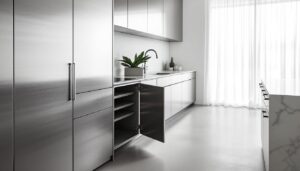
Modern minimalism benefits from the clean lines and seamless surfaces of metal cabinetry. Flush-mount doors with integrated pulls, uniform color, and handleless designs create an uncluttered look. Designers at Remodelista showcase how metal cabinets anchor contemporary kitchens without competing for visual attention.
Farmhouse and transitional kitchens can incorporate metal cabinets as accents. Use wood for perimeter cabinets and add a stainless steel island or a bank of open metal shelving. Powder-coated cabinets in muted greens, grays, or creams bridge the gap between rustic and modern. This mix-and-match approach appears frequently on design sites like Homedit, where curated galleries highlight unexpected material pairings.
Retro and vintage aesthetics call for powder-coated steel in classic colors, turquoise, cherry red, mint green, with chrome or brushed nickel hardware. Rounded door corners and ribbed drawer fronts replicate the 1940s-1950s look. Several manufacturers offer reproduction lines that match original dimensions and details.
Color and finish choices matter. Brushed stainless hides fingerprints better than polished. Matte powder coats feel more residential than glossy finishes. If mixing materials, keep metal as the minority, too much reflective surface can make a kitchen feel cold or echo-prone.
Installation and Maintenance: What Homeowners Need to Know
Installation Basics
Metal cabinets install much like wood units, but a few differences matter. Most metal cabinets mount to wall studs with screws through a hanging rail or rear flange. Because metal doesn’t compress, shims and leveling are critical, an out-of-level cabinet will bind doors and drawers.
Weight varies. Stainless steel cabinets weigh about the same as solid wood units: aluminum runs lighter. Wall-hung uppers still require fastening into studs or blocking, not just drywall anchors. Use #10 or #12 wood screws at least 2½ inches long, or toggle bolts rated for the cabinet weight if studs aren’t located where needed.
Cutting and modifying metal cabinets requires different tools. A metal-cutting blade on a circular saw or an angle grinder handles trimming, but measure twice, mistakes are harder to hide than with wood. Drilling for handles or hinges calls for sharp twist bits and cutting oil to prevent work-hardening the metal.
Leveling and shimming work the same way, but use plastic or metal shims, wood shims can compress unevenly under load. Many installers prefer adjustable cabinet legs for base units, which simplify leveling on uneven floors.
Maintenance
Daily cleaning is straightforward. Wipe stainless or powder-coated surfaces with a damp microfiber cloth. For stainless, wipe in the direction of the grain to avoid streaking. Avoid abrasive pads, which scratch protective finishes.
Stainless steel can develop water spots in hard-water areas. A 50/50 mix of white vinegar and water removes mineral deposits. For stubborn spots, use a stainless steel cleaner, but test in an inconspicuous area first.
Powder-coated finishes tolerate most household cleaners. Avoid bleach or ammonia-based products, which can fade or pit the coating over time. If a scratch exposes bare metal, touch it up with matching powder-coat repair paint to prevent rust.
Hardware deserves attention. Hinges and drawer slides should be stainless steel or zinc-plated. Lubricate moving parts annually with a silicone-based spray, avoid petroleum lubricants, which attract dust.
Rust prevention applies mainly to powder-coated or galvanized steel. Any chip or scratch that exposes bare metal should be cleaned, primed with a rust-inhibiting primer, and touched up promptly.
Cost Considerations and Where to Buy Metal Kitchen Cabinets
Pricing for metal kitchen cabinets ranges widely. Budget-friendly powder-coated steel units start around $150–$250 per linear foot for base and wall cabinets combined. Mid-range stainless steel runs $300–$500 per linear foot. High-end custom stainless fabrication can exceed $600 per linear foot, rivaling or surpassing premium wood cabinetry.
Costs vary by material thickness, finish quality, hardware, and whether the cabinets are stock, semi-custom, or fully custom. Powder-coated steel offers the best value for homeowners willing to accept a limited color palette and standard dimensions.
Where to buy depends on budget and timeline. Big-box retailers occasionally stock metal utility cabinets that work in a garage or laundry room but rarely carry residential kitchen lines. Specialty suppliers and online retailers offer a broader selection. Custom fabricators can match any dimension or finish but require longer lead times, often 8–12 weeks.
Used or vintage metal cabinets appear on salvage sites and architectural reclaim yards. Inspect carefully for rust, dents, and missing hardware. Refinishing powder-coated steel is possible but labor-intensive: stainless units clean up easily and often look nearly new after a good scrub.
Installation labor runs similar to wood cabinets, $50–$100 per hour for a skilled installer, with a typical kitchen taking 16–24 hours depending on complexity. DIYers with basic carpentry skills can handle installation, but kitchen metal cabinets still require two people for safe handling and alignment. Many home design resources, such as The Kitchn, discuss planning and budgeting for cabinet projects in detail.
Resale considerations are mixed. Metal cabinets appeal strongly to some buyers, especially those prioritizing durability and modern design, and alienate traditionalists who expect wood. In markets where contemporary design is valued, metal cabinetry can be a selling point. In conservative or traditional markets, it may limit the buyer pool.
Conclusion
Metal kitchen cabinets deliver decades of reliable service with minimal maintenance, resist moisture and pests, and offer design flexibility that spans industrial modern to vintage retro. They cost more upfront than stock wood cabinets but outlast them by a wide margin. For homeowners ready to move past particleboard and embrace a material that won’t sag, warp, or need refinishing, metal cabinetry is worth serious consideration.